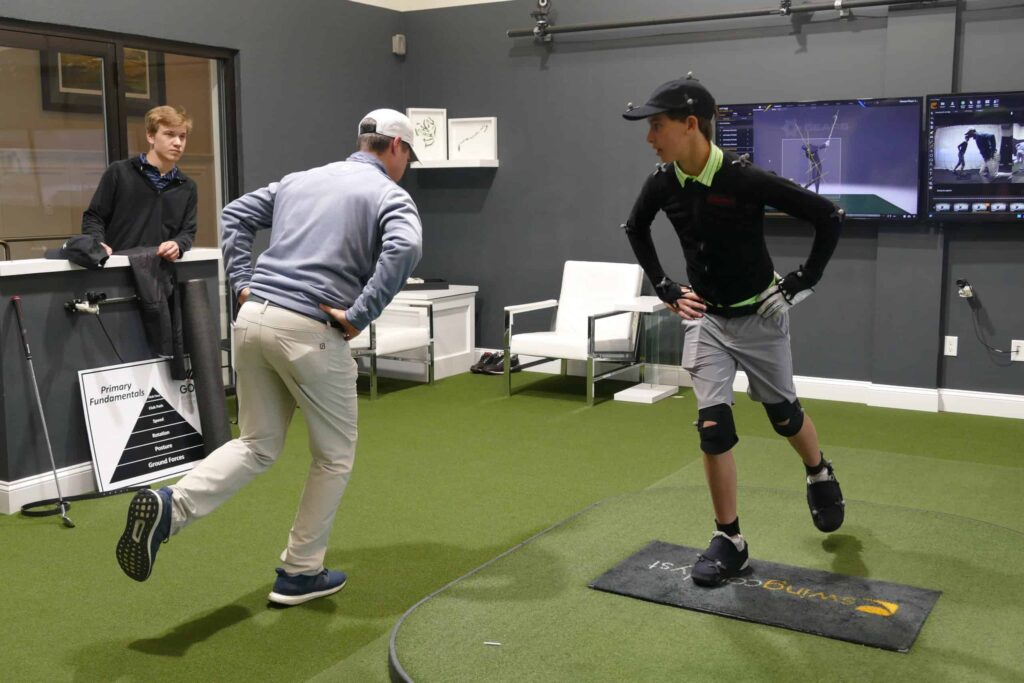
Walk into any practice facility today and you’ll see the same picture: a golfer staring at a launch monitor, scrolling through club speed, ball speed, path, face angle, launch, spin, carry—an entire universe of numbers. Technology has never been more available, and plenty of people will tell you that data is the key to improvement.
After thirty years of using every piece of golf tech imaginable, I can tell you this: technology is a measuring tool. It is not a coach.
What Data Can—and Can’t—Tell You
Numbers describe what already happened. They don’t explain how it happened, and they definitely don’t explain why. A launch monitor can tell you your path is too far in‑to‑out or your angle of attack is too shallow. That’s useful, but it’s only surface‑level information.
Real improvement comes from understanding the cause behind the number. Why is the path in‑to‑out? Is it mobility? Stability? Intent? Stress? Equipment? No screen can answer those questions. A good coach can.
Function Dictates Form
At the GPC, we believe a player can’t own a motion their body can’t produce. Everything starts with the body: ball control leads from path, path leads to clubface, and all of it must hold up under pressure. You can show a player their path number a thousand times—if their body can’t produce a different motion when it matters, the number won’t stay changed.
Smart adjustments come from understanding the individual: their physical capabilities, their mindset and mental skills, their tendencies under stress, and whether their equipment fits them. Technology supports that process, but it doesn’t replace it.
Where Technology Belongs
Used well, technology makes a good coach better. It can inform or confirm what we see, what we recognize helps quantify change, and gives players a clearer picture of what the club and body are doing. The mistake is letting the measurement become the plan. Data should inform coaching—not become coaching. Like, stats from a round, collecting statistics are important, however building a plan around them can be misleading. Many players and coaches refer to stats as a judgement of what they “should” do based on what others have done. Typically, a coach will reference what the best Tour players do or have done, which assumes that the current junior golfer is of equal skill as the Tour players. Which can create expectations that are unrealistic, leading to more disappointment, thus not wanting to capture the stats due to feeling more judged or not living up to those expectations.
Measure What Comes First
Where technologies can affectively help, if you want long‑term improvement, you must measure the lead factors—the things that happen before the swing, not just the results after impact. If you create the habit of baseline measuring, you can effectively track your progression and regression as you move through the developmental cycles as a golf athlete, from golf skills, physical literacy, and mental skills, this helps the coach, player and parents, set proper expectations based on where a player’s Player Development Index is, not what someone thinks they can do. Unrealistic player expectations get set by players, coaches and parents way too often and creates a negative effect when players don’t meet the expected outcomes, versus having proper data or lead information to set proper goals based on process and not outcomes. That’s why we built the Player Development Index (PDI).
PDI grew out of more than twenty years of work at the GPC. It evaluates a player’s golf, physical, mental skills and performance on the course so coaches can see where a player truly starts and whether they’re making real gains, often before those gains show up on the scorecard. Which helps quantify performance potential. It answers the question technology can’t: why.
So, the next time you finish a session with a screen full of numbers, ask yourself one more question: why did that happen? Then find a coach who can help you answer it.
Enjoy Your Journey,
Roger