

The Paradox of Winning: Why Great Performers Stop Watching the Scoreboard
What Alexander Zverev’s US Open finish teaches us about absorption, focus, and the psychology of peak performance.
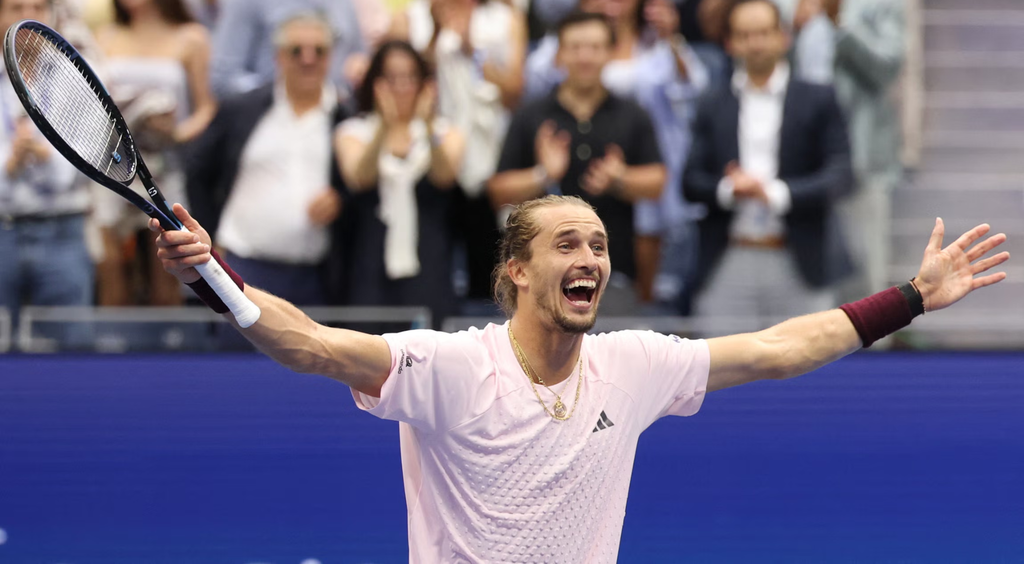
At this year’s US Open Men’s Tennis Championships, Alexander Zverev beat Ben Shelton 6-3, 7-6, 5-7, 6-2 to win his second Grand Slam title, three months after his first at the French Open. Six years earlier, on the same court, he had been two points from the title before losing to Dominic Thiem. This time the crowd erupted, his team celebrated, and millions watched him finally close it out.
There was just one problem. Zverev didn’t know he’d won.
He had lost track of the score. He believed he was up 5-1 in the fourth set, and when Shelton’s return sailed long on match point, Zverev turned and walked back to the baseline to get ready for the next game. He had tuned out a stadium full of people cheering for his opponent so completely that he never heard the umpire call the match. Only when he glanced at his coaching team, who told him he had won, did he realize it was over.
Afterward he laughed about it and suggested the confusion may have helped. Had he known he was serving for the championship, he figured, he would have been a lot more nervous.
Here was someone who had spent most of his life chasing this exact moment, through thousands of hours of practice and some very public heartbreak. And when it finally arrived, he missed it, because he was too busy playing tennis.
The Paradox of Pursuing Success
One of the most reliable patterns in performance psychology is that wanting an outcome fuels preparation, while preoccupation with that outcome interferes with execution.
We need goals. They tell us what we’re working toward and why the sacrifices are worth it. But something shifts when we move from preparing to performing. The goal that got us out of bed for years can become the very thing that pulls attention away from the task in front of us.
Consider a golfer standing on the 18th tee, one good hole away from the best round of their life. For seventeen holes they’ve played with freedom: picking targets, trusting their swing, absorbed in the game.
Then they look at the scorecard.
Now they’re not thinking about where the tee shot should land. They’re thinking about the score about not blowing it, about what this round will mean. The fairway is the same width it was an hour ago. The hole is the same size. The ball has no idea what the score is.
What has changed is the task the golfer is actually performing. They’ve stopped playing golf and started playing “score”, or the meaning of the outcome.
What Flow Actually Looks Like
Psychologist Mihaly Csikszentmihalyi described flow as a state of deep absorption in which attention narrows to the activity itself, while self-consciousness and worry about outcomes recede. Athletes call it being in the zone.
It’s tempting to read Zverev’s moment as a story about forgetting the goal. But that isn’t quite how flow works. Csikszentmihalyi found that clear goals and immediate feedback are among the conditions that make flow possible. The goal doesn’t vanish. It shrinks, from “win the US Open” to “win this point,” from “break 70, 80, 90” to “hit this shot to that spot.”
He also described an altered sense of time as one of flow’s hallmarks: hours pass like minutes, or a single moment stretches out. Losing track of a game on the scorecard is a close cousin of that.
We can’t know whether Zverev was in flow. What we do know is that his attention was so fully on the next point that the bigger picture slipped out of view. That’s the distinction worth noticing.
Back to the 18th Tee
The golfer on the 18th tee doesn’t get Zverev’s lucky accident. They’ve seen the card. They can’t un-know the score, and trying to will only make them think about it more.
So the skill isn’t ignorance. It’s what the golfer does with the thought once it shows up.
- Notice the shift. The first signs are often physical: walking faster, gripping tighter, rushing the pre-shot routine. Or the mind jumps ahead to the clubhouse and the conversation afterward.
- Name it without fighting it. “There’s the breaking 70 thought.” The thought can stay. It just doesn’t get to pick the club.
- Come back to the shot. Pick the target. Make the decision you’d make on the 4th hole. Go through the routine at your usual pace.
The score belongs in the background, not in the swing. You can know exactly where you stand and still give the shot your full attention. That’s what the best performers do week after week. It isn’t that they don’t know the stakes. It’s that the stakes don’t run the show.
Direction and Attention
None of this means caring less. The best performers care enormously. The point is that goals and attention do different jobs.
Goals give our effort direction. Attention determines the quality of our execution.
The challenge is knowing which one the moment calls for. Before and between performances, the goal belongs front and center. In the middle of the shot, the point, or the presentation, it belongs in the background.
Zverev’s finish is a reminder that something extraordinary is often the product of being completely absorbed in something ordinary: the next point, the next shot, the next decision.
The purpose of a goal is to guide us toward where we want to go, not to distract us from what we need to do to get there.